Short answer: It isn't really stronger, it's built differently. The bean is robusta, which carries roughly twice the caffeine of arabica and far less of the sugar and oil that make arabica smell like fruit. The phin filter drips rather than pressurises. The condensed milk is a workaround for a country that had no fresh dairy. Strength is a side effect, not the point.
Why robusta, when the rest of the world chose arabica?
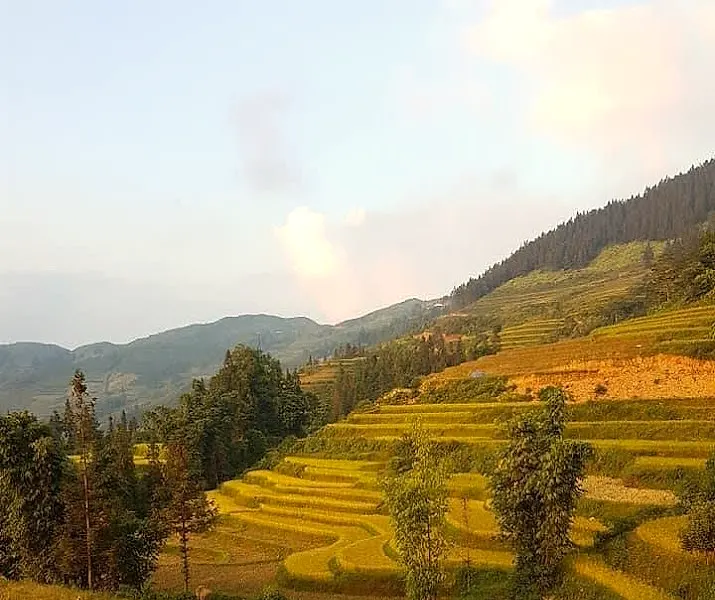
Because of where the coffee grows and what survives there. French planters brought coffee to Vietnam in the second half of the nineteenth century, and the plant that took hold on the red basalt around Buôn Ma Thuột and across Đắk Lắk was robusta — happy at lower altitudes than arabica demands, tougher against leaf rust, more generous per hectare. Vietnam is now the largest robusta producer in the world, and almost all of it comes from those highland plateaus a few hours inland from the central coast.
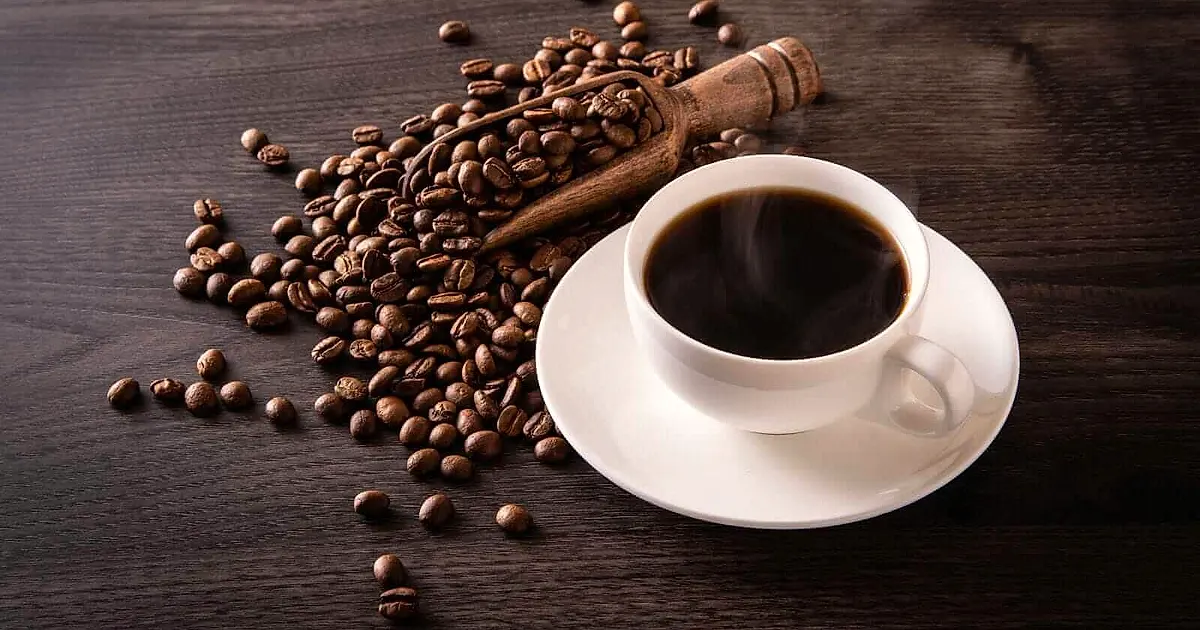
The chemistry follows. Arabica carries more lipids and more sugar, which is where the jasmine, the citrus, the whole vocabulary of a specialty menu comes from. Robusta carries more caffeine and more chlorogenic acid: less perfume, more body, a flat bitterness closer to dark chocolate and roasted grain than to fruit. Roasters here lean into that rather than apologise for it, taking the beans dark and often finishing them with fat — butter or oil, sometimes a little sugar caramelised at the end — which is why a bag of Vietnamese coffee can smell faintly of toffee before you have brewed anything.
A third-wave barista would call several of those choices defects. They are not. They are a different drink, arrived at by a different route, and judging it by arabica's criteria is like marking a stout against the standards of a pilsner.
What is the phin actually doing?
Very little, slowly, which is the whole trick. The phin is a small stamped aluminium or stainless cup with a perforated base, a chamber for the grounds, a press disc that sits on top of them and a lid. It goes directly over the glass. You add the ground coffee, settle the disc, pour a splash of boiling water to let the bed swell, wait, then fill it and put the lid on.
What follows is gravity and nothing else. No pressure, no agitation, no paper. The water takes several minutes to work through — four or five if the grind is right, longer if someone has tamped it hard — and what lands in the glass is a thick, dark, unfiltered-tasting concentrate with a fine sediment that a paper cone would have caught. Watch the drip in a Hanoi pavement café at seven in the morning and you will notice nobody is watching it. The phin is a timer as much as a filter. It buys you the length of a conversation, a cigarette, half a newspaper. Ordering coffee in Vietnam assumes you have somewhere to sit.
The sound is part of it too: a tick into the glass at first, then the hollow click of the metal lid being lifted and set upside down on the saucer so it does not drip on the table.
Why condensed milk, and not fresh?
Because for most of the twentieth century there was no fresh milk to be had. Vietnam had little dairy tradition and almost no cold chain, in a climate that turns milk in an afternoon, and what the French supply lines brought instead was sweetened condensed milk in a tin, which keeps on a shelf in the tropics for months and needs no refrigeration until it is opened. It was the available answer to a real problem. The sweetness came with it rather than being the reason for it.
Having arrived, it turned out to suit robusta better than fresh milk would have. The sugar and the viscosity take the edge off that chlorogenic bitterness without washing out the body, which thin fresh milk would do. Cà phê sữa đá — coffee, condensed milk, ice, usually in a tall glass with a long spoon — is the national default, and the ratio is regional. The south likes it sweeter and milkier. In Saigon you can order bạc xỉu, which is mostly milk with a measure of coffee turned into it; the name comes from a Cantonese phrase that means roughly white with a little, a reminder of who ran many of the city's coffee counters.
The same shortage produced Hanoi's egg coffee in the 1940s, where whipped yolk stood in for milk that wasn't there. We have written about that glass separately. More recently Huế gave the country salted coffee, cà phê muối, where a lightly salted cream sits on top of the dark coffee and is stirred down through it.
How should you order it, and when?
Early, sitting down, and sweeter than you think you want. Say cà phê sữa đá for iced with milk, cà phê đen đá for iced black, nóng instead of đá if you want it hot. If sweetness worries you, ask for ít đường — a little sugar.
Practical judgement from the glass: drink it before mid-morning rather than after lunch, because a robusta phin at four in the afternoon will still be with you at midnight. Keep it to one or two a day for the first few days. If you have a boat, a long drive or a climb starting at dawn, have the coffee after the activity, not twenty minutes before you get in a car on a mountain road. And sit on the low plastic stool. Standing at a counter with a paper cup misses the point of the apparatus entirely.
When this isn't for you
If you are sensitive to caffeine, be careful rather than curious: a single phin of robusta can carry what two arabica cups would, and nobody will warn you. If you take coffee black and unsweetened by principle, the default glass will read as syrup — order cà phê đen and expect bitterness without rescue, or look for one of the specialty roasters in Hanoi, Đà Lạt and Saigon working with Vietnamese arabica, which exists and is good. If you want a flat white that tastes like the one at home, you can find it in any Vietnamese city now, and there is no virtue in forcing the phin. And if your mornings start at six with a departure, the four-minute drip is a genuine inconvenience; order it the night before in your head and build the time in.
The drink is not a rougher version of something you already know. It is the result of a bean that grew where it could, a filter that needed no electricity, and a tin that did not need a fridge. Three constraints, one glass. Practical questions about travelling here are gathered in our FAQ.
Quick questions
Is Vietnamese coffee stronger than espresso?
Per volume, espresso is more concentrated, but a phin glass is larger and made from a higher-caffeine bean, so the total dose is usually greater. The effect lasts longer too.
Can I buy a phin to take home?
Yes, in any market or supermarket, and they cost very little. Choose a stainless one with a screw-down press rather than a loose disc; the cheap aluminium ones warp and then drip unevenly.
Is Vietnamese arabica worth seeking out?
It is. Most of it grows around Đà Lạt and in pockets of the northwest, and specialty cafés in the big cities serve it alongside robusta, usually brewed in a cone rather than a phin.