The glass is small, about the size of a votive candle holder, and it arrives sitting in a shallow bowl of hot water. On top there is an inch and a half of pale gold foam, dense enough that a teaspoon stands in it for a second before it sinks. Underneath, black coffee, thick and bitter, the kind brewed slowly through a metal phin. You are meant to spoon the first half and drink the second. Nobody tells you this. You work it out by watching the table next to you.
Cà phê trứng is the only Hanoi drink that came out of a shortage. In the mid-1940s fresh milk in the city was scarce and expensive, imported in tins if it arrived at all, and a bartender working at the grand French hotel on Ngô Quyền street began whisking egg yolk with sweetened condensed milk to build the same richness from ingredients that were actually on the shelf. He later left and opened his own place in the Old Quarter. The café still carries his name, and it is still reached by walking down a narrow corridor past a parked motorbike and up a flight of stairs that smell faintly of coffee grounds and damp plaster.
Why the water bath matters
The bowl is not decoration. Egg foam is an emulsion held together by protein and air, and it is fragile in two directions: it collapses if it cools, and it scrambles if it gets too hot. The hot water keeps the glass in the narrow band where the foam stays glossy and the coffee underneath stays drinkable. Left on a cold marble table in January, the whole thing goes slack in about ten minutes and the yolk begins to taste of yolk rather than of custard.
That is the honest window. Ten minutes, maybe twelve on a warm afternoon. Which is why the drink does not travel and why a takeaway cup of it is a different and lesser object. It also explains a distinction worth knowing before you order: some cafés whisk each glass when you ask for it, others ladle from a batch made at eight in the morning. The batch version is smoother, sweeter, flatter. The whisked version has a faint tang at the back, almost like a tiramisù that has been left slightly under-sugared, and a texture with some grain in it. Once you have had the second you cannot go back to the first.
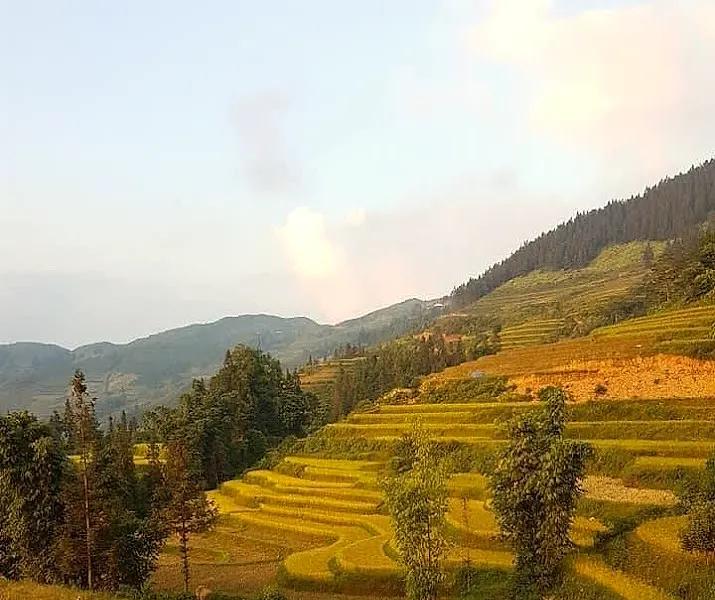
The coffee underneath is robusta, not arabica, and this is deliberate rather than a compromise. Robusta carries roughly twice the caffeine, less acidity and a heavier, almost rubbery body that can stand up to three spoonfuls of condensed milk without disappearing. Vietnam grows most of its robusta in the red basalt soil of the central highlands around Buôn Ma Thuột. A cup of egg coffee is, in that sense, a piece of the highlands arriving in a colonial-era stairwell in the Old Quarter.
The variants, and the one that is a step too far
Once the technique existed, Hanoi did what Hanoi does and applied it to everything. Egg cacao, which is closer to a dessert and often served to children. Egg green tea, which sounds wrong and is quietly excellent, the matcha bitterness cutting the yolk. Egg with a measure of rum stirred into the coffee, which appears on the menu in the cold months. And egg beer, which exists, which people order, and which we will decline to defend.
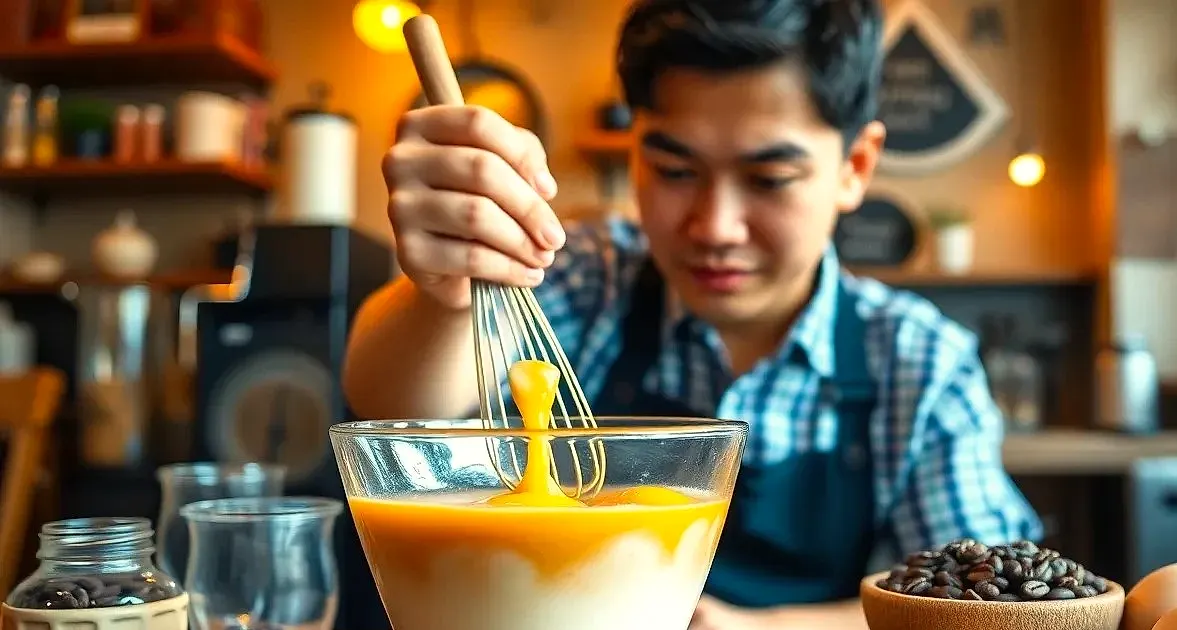
The classic remains two yolks, condensed milk, a little sugar, whisked hard by hand or with a small electric beater for two or three minutes until the volume roughly triples and the colour lightens from orange to straw. Some places add a drop of coffee to the foam itself to take the edge off the egg. Most do not.
The hour to drink it
We build our Hanoi days around the fact that the city has two good hours and a long hot middle, and egg coffee belongs firmly to the second of them. On the West Lake promenade the light goes soft after half past three, the water turns the colour of weak tea, and the cafés on the eastern shore put low stools out facing the water. That is the cup worth sitting still for: the foam warm, the lake going metallic, a fisherman's line out over the wall.
The Old Quarter version is a different experience entirely and we do it on the first evening, at walking pace, as part of the street-food stretch that also takes in bánh mì and bún chả. Those rooms are hot, loud, upstairs, full of Hanoians on plastic stools, and the drink is a punctuation mark rather than a pause. Our guides know which stairwells on Nguyễn Hữu Huân and Hàng Gai still whisk to order and which have quietly moved to a batch, and that list changes often enough that it cannot be looked up.
There is no ceremony to any of it. A glass, a bowl of water, a teaspoon, and a drink that exists because somebody in 1946 could not get hold of milk and refused to serve a worse cup of coffee because of it.