Short answer: Yes, and in at least one case the kayak is the only way in. Hang Sáng, the Bright Cave in Lan Hạ Bay, has an entrance that clears the waterline only at low tide, which is too low for a tender and too narrow for anything with an engine. Whether you get in depends on the tide table and the weather that morning, not on booking.
What makes Hang Sáng different from the caves you walk into?
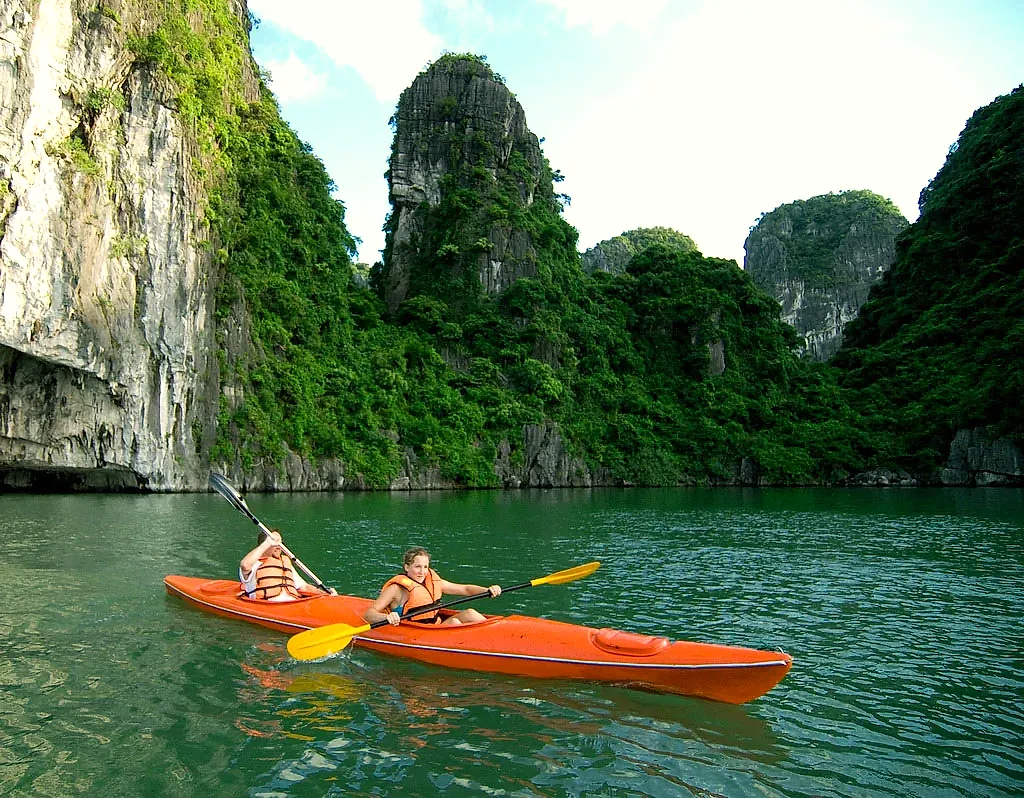
There is no staircase, no handrail and no lighting rig — the way in is a gap in the limestone that the falling tide uncovers. Most of the caves people photograph in this seascape are entered on foot, up concrete steps, with coloured lamps bolted into the rock. Hang Sáng is entered sitting down, at water level, with your paddle held flat across the deck because the ceiling comes close near the mouth.
Then the roof lifts. The scale inside is cathedral-like, and the sound changes before the light does: the slap of water against the hull goes hollow, voices carry further than you expect, and somewhere behind you the drip of fresh water off the ceiling keeps its own rhythm. The light that reaches in is reflected off the water outside, so it arrives from below and moves on the rock. It is the opposite of a floodlit cave, where the light comes from the floor-mounted lamps and nothing moves at all.
Outside the entrance, the water in these inner lagoons is often glassy and green with the karst wall going straight down. Kingfishers work the rock face. The limestone here is the same system that holds the raft communities off Cát Bà — a thread picked up in Cái Bèo, the oldest address in Lan Hạ Bay.
Why does the tide decide the whole thing?
Because the entrance is a fixed height and the sea is not. At high water the gap closes to a slot that no kayak clears; at low water it opens and the paddle in. The window is a couple of hours either side of low tide, and low tide moves roughly fifty minutes later each day, so the hour that works on a Tuesday does not work on the Saturday.
This is why the cruise programme carries a flexibility clause tied to tide and weather, and why you should read any stated time as a plan rather than a promise. On a private eight-day route through Hanoi, Hạ Long and Sa Pa, the suggested morning puts the Lan Hạ kayaking and Hang Sáng at around eight o'clock on the second morning aboard, before the day's boat traffic thickens; it can shift with the tide, and sometimes it has to.
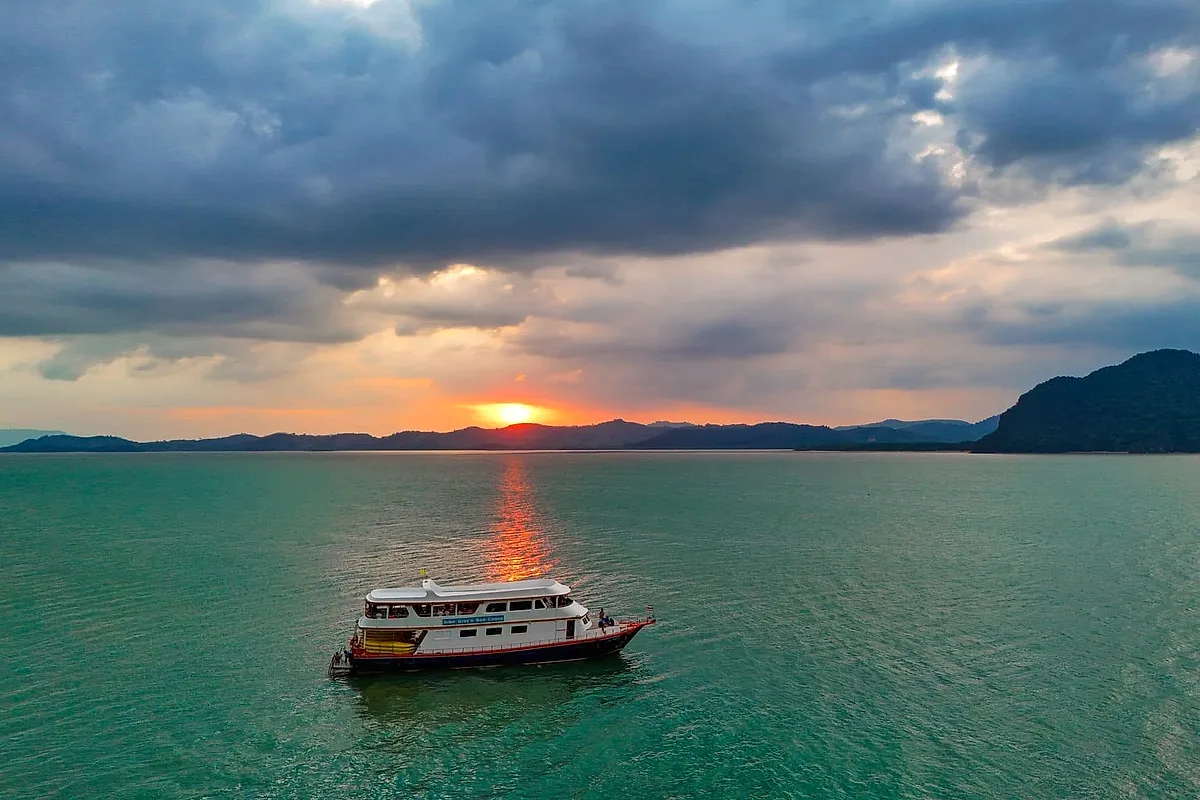
Kayak equipment and life jackets are provided, along with national park and port fees, so nothing on the morning depends on what you packed. What it does depend on is being awake. Sunrise on deck with coffee is served before the paddling, and the water is at its flattest in that first hour — the wind in this bay generally builds through the morning.
What does the paddling actually feel like?
Short, flat and sheltered, with one exposed stretch. Inside the lagoons the karst walls block most of the wind and the water barely moves; crossing between them you are out in the open with sun on your shoulders and whatever chop the day has produced. Inside the cave it is genuinely cool, several degrees down on the deck, and the air smells of wet stone and salt.
The distances are modest and the boats are stable sit-on-top doubles. You will get wet from the drip off the paddle shaft, which matters more in January, when the north is grey and damp and the air over the water is cold, than in July. Dry bag for the phone. Shoes you can soak.
October to December is the clearest stretch of the year here — dry, mild, long visibility down the bay. January to March brings fine drizzle and mist that sits on the karst and turns every photograph grey-on-grey, which some people prefer. June to September is hot and humid with afternoon thunder, and tropical storms in that window can suspend cruise departures at short notice.
When this isn't for you
If you are uneasy in enclosed spaces at water level, skip it without apology. The entrance is low and brief, but you are inside a rock with a boat under you, and there is no quick exit on foot. The same goes if you have a shoulder or back problem that makes a sitting paddle stroke painful — the kayaking is optional, and the bay from the sundeck with a coffee is not a consolation prize.
Travellers who want a guaranteed cave will be happier with one of the walk-in caves on the main tourist circuit, where the entrance is at a fixed height above the water and the only variable is how many other people are on the staircase. And if your sole interest in Hạ Long is the view, two nights afloat is more than you need; the karst reads perfectly well from a day boat.
The honest frame is this: you are planning a morning around a door that the moon opens and shuts. Most mornings it opens.
Quick questions
Do I need kayaking experience?
No. The craft are stable, the distances short, and a safety briefing and life jacket come before you get in.
Can the cave be cancelled on the day?
Yes — the tide and weather clause exists precisely for that. If the water is too high or the wind too strong, the morning is re-shaped around the bay instead.
Is the cave lit inside?
Not artificially. The light is daylight reflected off the water outside, which is why it is brightest in the hours around midday and on clear days.